Ground Floor Dampness in Bangalore — Root Causes & Permanent Solutions
 By Vikram MenonStore Manager & Operations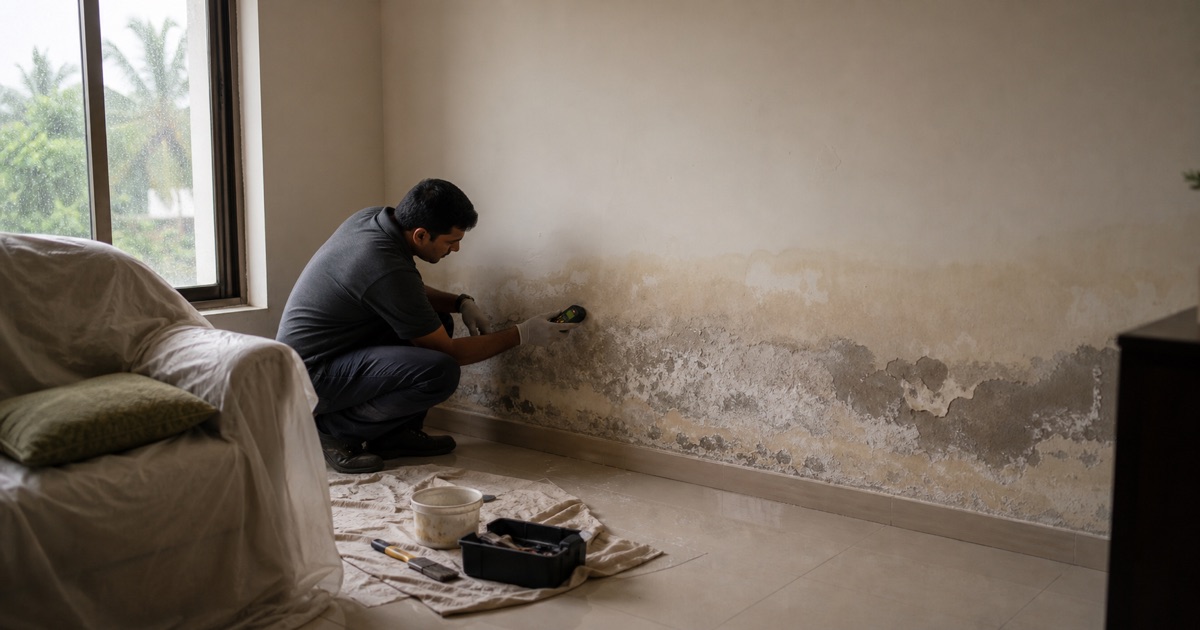
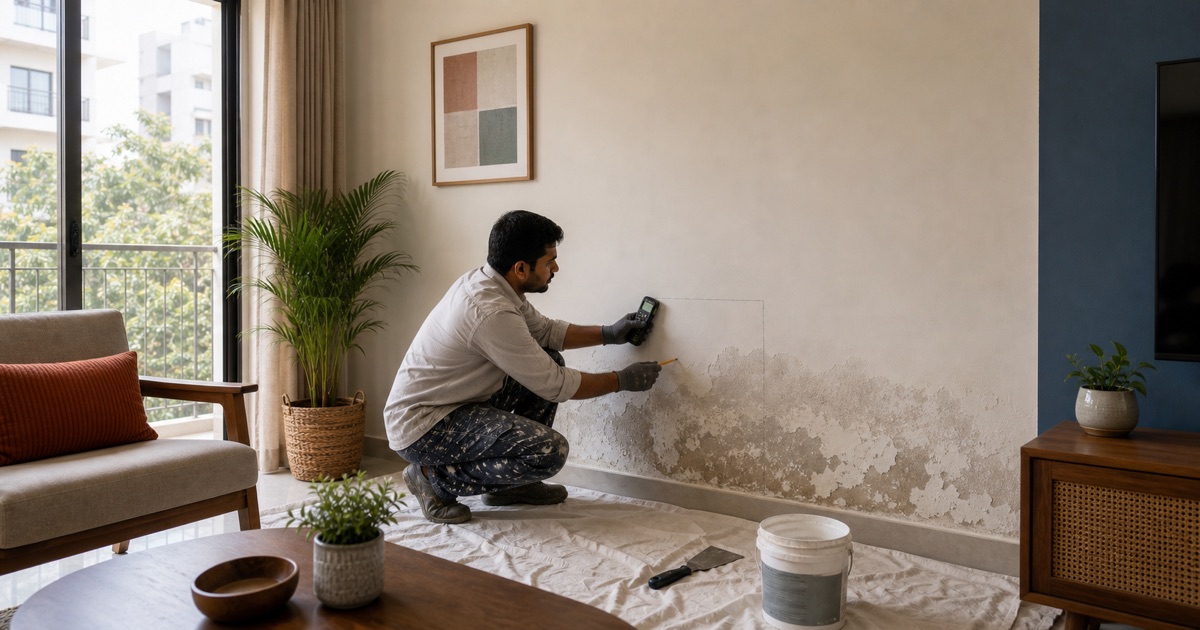
If you live on the ground floor of a Bangalore apartment or own an independent house in an older BDA layout, you've probably battled dampness at some point. Walls that feel cold to the touch, paint that bubbles and flakes near the floor, a persistent musty smell that doesn't go away despite cleaning — these are all signs of dampness that needs attention, not cover-up.
The tragic part is that most homeowners spend years painting over the same damp patches, each time hoping for a different result. At VarNa Homes, we see this weekly — customers who've repainted three times in five years and finally come in frustrated asking why nothing works. The answer is always the same: you cannot paint your way out of a moisture problem. You have to fix the moisture source first.
Why Ground Floor Bangalore Homes Struggle With Dampness
Bangalore sits at 900 metres elevation on the Deccan Plateau, with characteristic red lateritic soil that holds moisture for months after monsoon. Ground floor walls are in direct contact (or very close proximity) to this damp soil. In properly constructed buildings, a damp-proof course (DPC) — typically a layer of bitumen or cement waterproofing compound at plinth level — blocks moisture from rising into the walls.
The problem is that DPCs installed in homes built before 2000 are often compromised. Bitumen-based DPCs degrade in 20-25 years. In many 1980s-90s constructions in Jayanagar, Malleswaram, Basavanagudi, and older BDA layouts, DPCs were either poorly installed or skipped entirely to save costs. Add external drainage issues (monsoon water pooling against the plinth) and you have a perfect recipe for rising damp.
Signs to Recognise
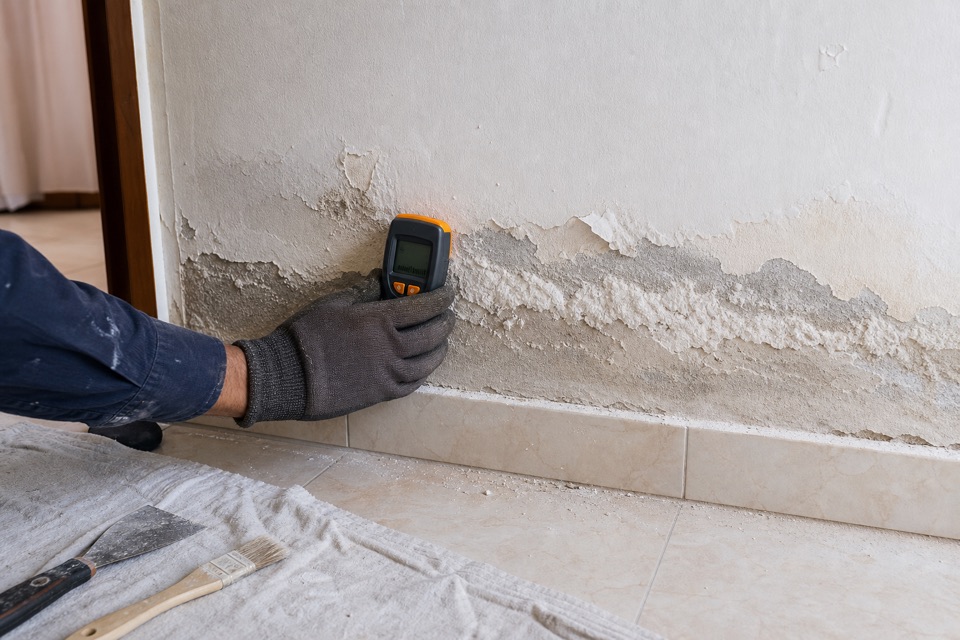
- -Salt efflorescence — white, powdery deposits on walls, especially near the floor. These are salts carried up by moisture and deposited as water evaporates.
- -Paint peeling or bubbling in a tide-line pattern 1-3 feet above the floor.
- -Musty smell in closed rooms, especially bedrooms and storage areas.
- -Plaster crumbling or feeling soft when pressed.
- -Fungal growth (black spots) in corners and behind furniture.
- -Cool wall temperature — walls feel noticeably cold even on warm days.
Common Locations in Bangalore
We see ground floor dampness concentrated in specific pockets across the city:
- -Older BDA layouts (Jayanagar 1st-4th Block, Malleswaram, Vijayanagar, Banashankari 1st Stage) — 1980s-90s construction with ageing DPCs.
- -Low-lying apartment complexes in Koramangala, HSR Layout, and parts of Bellandur where groundwater levels are high.
- -Independent houses with stilt parking — the ground floor residential unit shares walls with a parking level that retains humidity.
- -Homes near lakes (Madiwala, Ulsoor, Bellandur) where the high water table worsens rising damp.
The 3 Types of Dampness
1. Rising Damp
Moisture from the ground rises up through porous wall materials via capillary action. Recognisable by the tide-line pattern 1-3 feet above floor level. Requires DPC restoration.
2. Penetrating Damp
Water entering horizontally through walls — from plumbing leaks, external cracks, or poor window sealing. Shows up as localised damp patches that may be high, low, or anywhere. Requires source identification and external sealing.
3. Condensation
Water vapour in the air condensing on cool wall surfaces. Common in closed bathrooms, kitchens, and north-facing rooms. Shows as water droplets, fungal growth on corners, and doesn't leave typical tide-lines. Fixed with ventilation improvements, not waterproofing.
Short-Term Fixes vs Permanent Solutions
Short-term fixes (Rs 8,000-15,000) typically include scraping affected plaster, applying dampproof paint like Dr. Fixit Dampguard or Asian Paints Damp Proof, and repainting. These buy you 12-18 months but don't address the moisture source. Eventually the problem returns, often worse.
Permanent solutions (Rs 25,000-45,000) require identifying the dampness type and treating the root cause:
- -Silicone DPC injection — chemical damp-proof course installed by drilling holes at plinth level and injecting a water-repellent silicone. Rs 450-650 per running foot of wall.
- -External drainage correction — redirecting rainwater away from plinth, installing French drains if necessary.
- -Replastering with waterproof additives — removing compromised plaster to 3-4 feet height, replastering with Dr. Fixit LW+ or Sika integrated waterproofing.
- -Internal breathable finish — allowing remaining moisture to evaporate through the wall rather than trapping it under impermeable paint.
Cost Breakdown
| Approach | Typical Cost | Lifespan |
|---|---|---|
| Damp-proof paint only | Rs 8,000-12,000 | 12-18 months |
| Replaster + waterproof paint | Rs 15,000-25,000 | 3-5 years |
| Full silicone DPC treatment | Rs 25,000-45,000 | 20+ years |
Products That Work
We stock the full range of waterproofing products for dampness treatment. Our most-recommended include Dr. Fixit Dampguard (internal dampproof coating), Dr. Fixit LW+ (integral waterproofing for plaster), Fosroc Brushbond (cementitious waterproofing), and Sika-1 (integral plasticiser). For severe cases, Dr. Fixit's silicone DPC kit is the gold standard.
When to Call Professionals
Call professionals if you see any of the following: tide-lines higher than 1 foot above floor, salt efflorescence that returns within months of cleaning, wet patches appearing after heavy rain, multiple rooms affected, or visible plaster delamination. These indicate structural moisture issues that require proper diagnosis and treatment.
Frequently Asked Questions
Stop Painting Over Damp Walls
Send us photos of your damp walls on WhatsApp and we'll recommend the right permanent solution.
Get Expert Advice